Bonu
The Problem Worth Solving
People forget, and not just “where are my keys?” forget.
ADHD blurs time. Dementia erases stories. Traumatic brain injuries flatten emotional context. Depression makes it hard to tell what helped. Chronic pain hides patterns.
Most existing tools focus on what society considers essential: appointments, reminders, daily tasks. What gets overlooked are the intangible parts of life, the memories and moments that shape identity.
Skills
Product Design
Vibe Coding
Product Management
Machine Learning
Industry
Health/Wellness
Context & Scope
Key Decisions and Tradeoffs
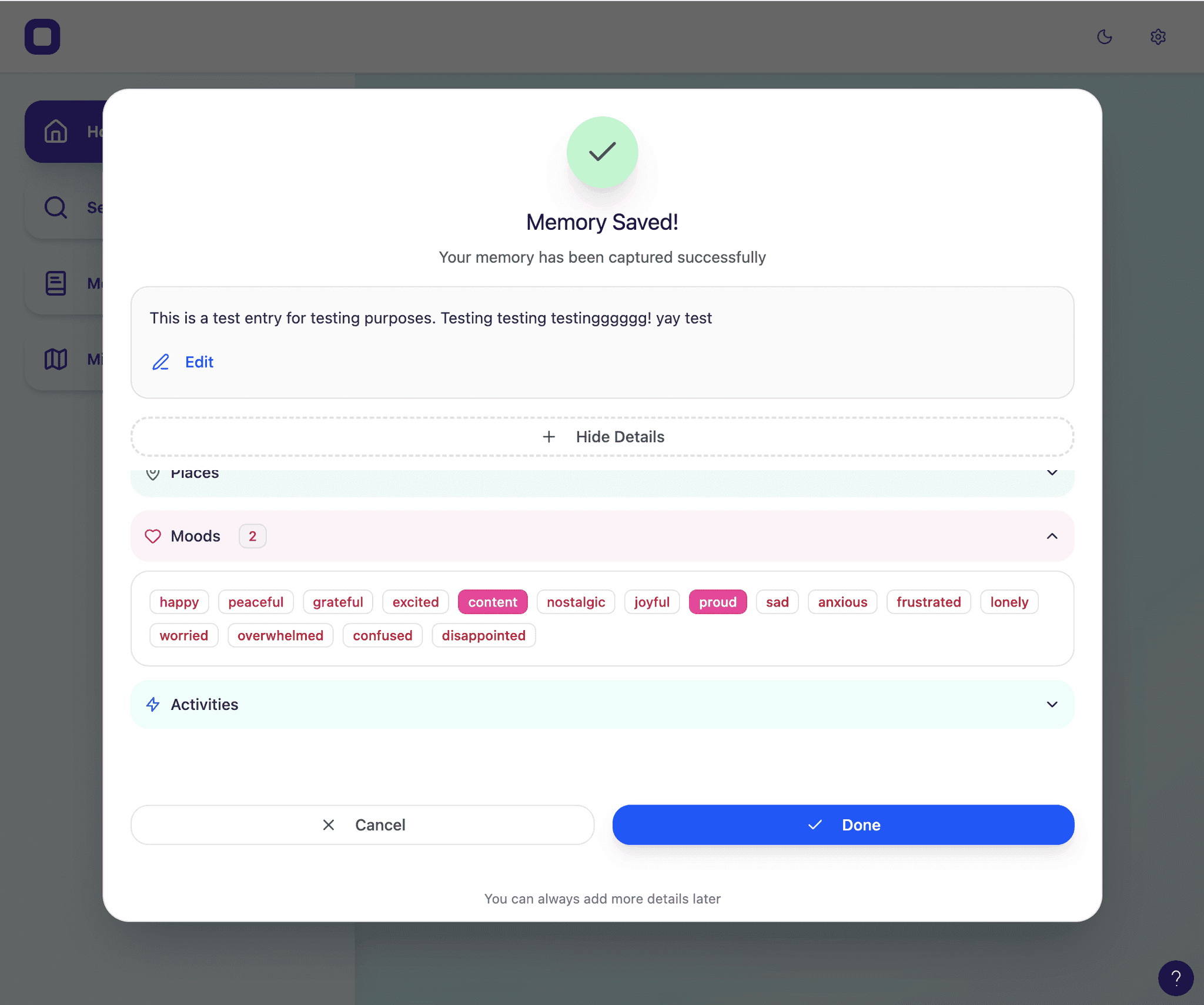
Early experimentation revealed a clear tradeoff: LLM's are strong at meaning but weak at emotion. Explicit mood tagging became necessary to prevent the system from flattening meaning.
I deliberately rejected pixel perfection in favor of exploration. Instead of polishing surfaces, I used this project to play with tools and test the limits of theoretical AI product design, pushing toward something that felt more human or brain-like. The tradeoff was less visual refinement in exchange for deeper insight into what these tools can and cannot do.
The Product
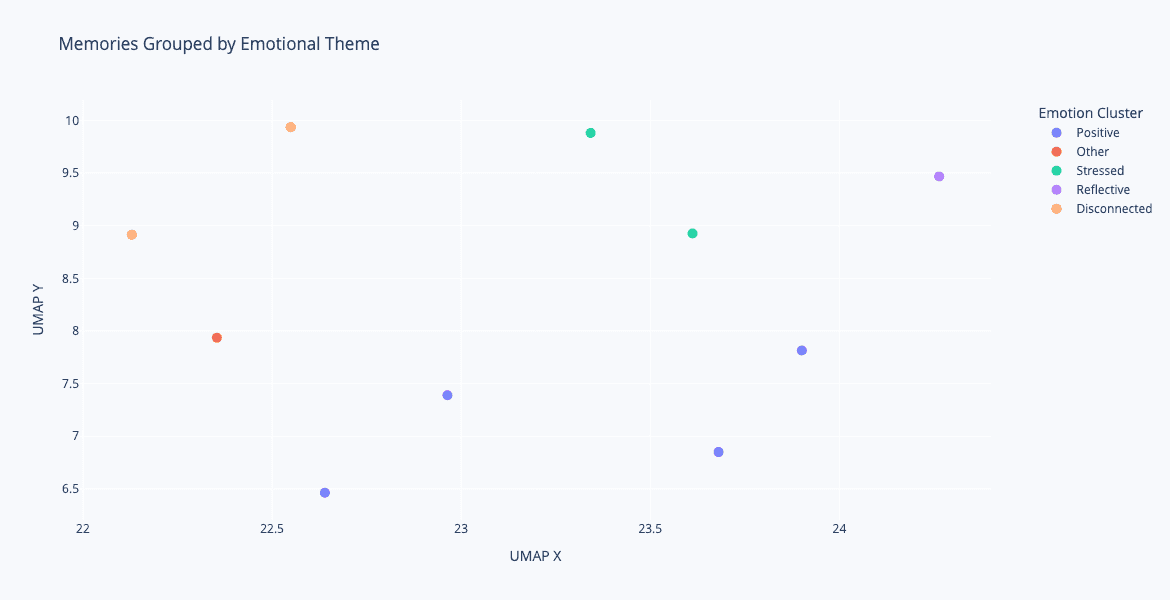
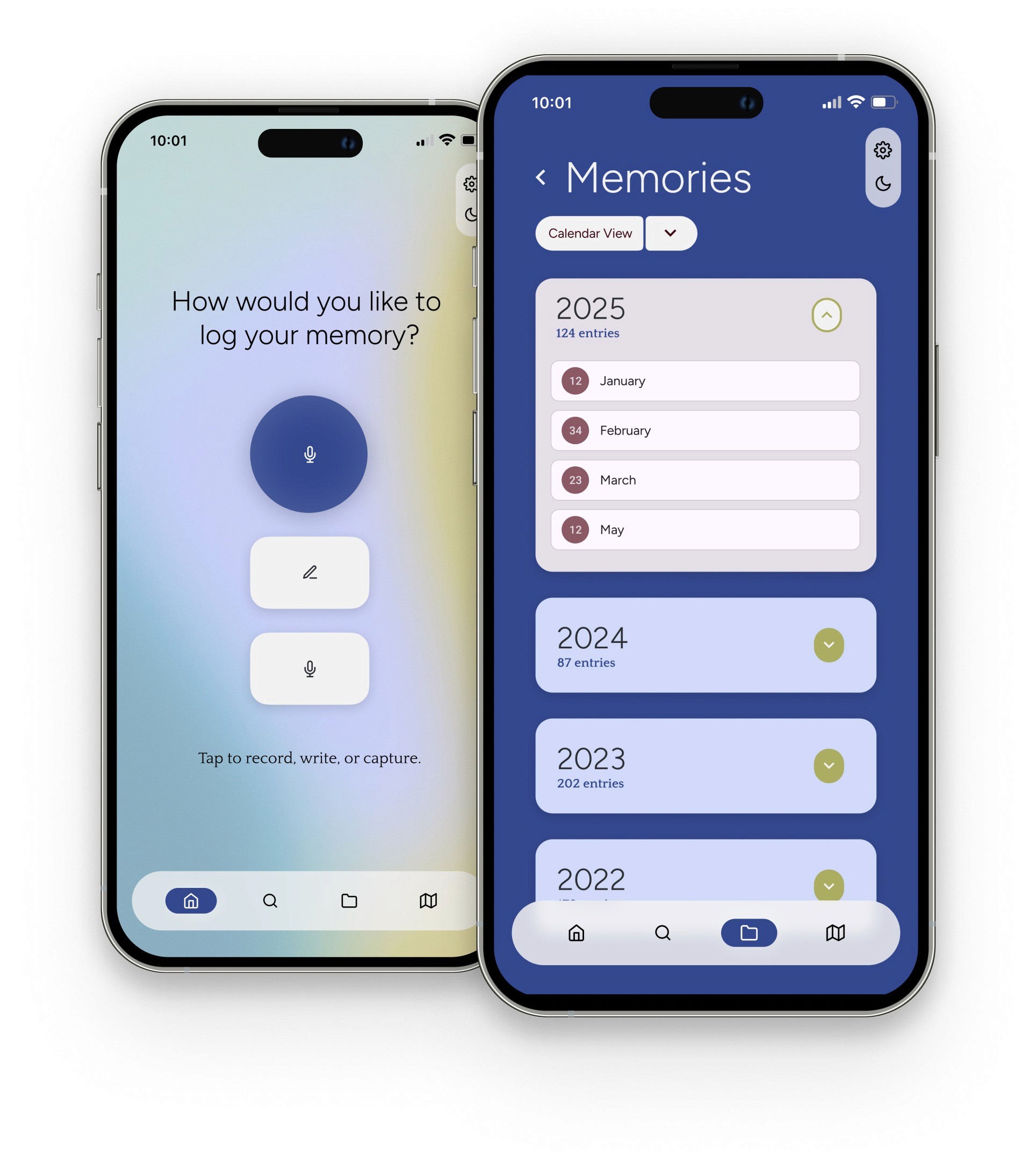
The design journey was research, prototype, test, iterate. I built a Python notebook to cluster memories. I broke Figma Make trying to prototype my memories map. (Oops.) After I vibe coded like a maniac, I eventually made my way to a few demo screens showing the UI concept.
My work balanced emotional safety, clarity, and AI transparency. Over 300 Figma Make iterations later, the system still feels human.
Along the way, the project exposed real weaknesses in prompt-to-design tooling and reinforced the importance of human intervention and designing AI systems that don’t pretend to understand more than they do.
Reflection
There is so much potential for Bonu, but for me phase 2 is about expanding how insight is created and experienced once memories are structured. The goal is deeper perspective.
This includes surfacing patterns and trends across mood, habits, and relationships, including periodic, Spotify Wrapped-style summaries that visually reflect long-term themes users could not assemble on their own. Multi-format capture would allow writing, sketches, and voice notes to coexist within a single entry, better matching how people actually think. Context-aware prompts could encourage deeper reflection, while alternative visualizations would offer new ways to explore memories for different brains.
Together, these features would push Bonu toward what it is ultimately meant to be: a system that helps people see meaning in their own lives without requiring more effort, structure, or cognitive load from them.