AkiraAI
Some medical decisions cannot be undone. AkiraAI is a system designed to help patients facing irreversible vocal surgery better understand what that decision might mean, not intellectually, but experientially.
The Problem Worth Solving
Patients were being asked to consent to a permanent change without a meaningful way to experience it in advance. Written descriptions, data, and verbal explanations did not address the core fear clinicians were hearing: what would the surgery results actually feel and sound like?
By the time I joined the project, the problem was well understood clinically but unresolved product wise. The challenge was designing a system that could offer experiential clarity and moral support.
Client
PureMathAI
Industry
HealthTech
Skills
Product Design
Product Management
UI/UX
Year
2025 (in active development)
Context & Scope
The core voice simulation technology was developed by the founder of Pure MathAI using data science and engineering expertise. I joined after this technical foundation existed and led the product and design work from that point forward.
I defined the MVP scope, translated clinical needs into concrete user flows, prioritized features and tradeoffs, and developed the UX strategy. The system had to operate within real constraints: a medical context, irreversible outcomes, and high emotional stakes.
Key Decisions and Tradeoffs
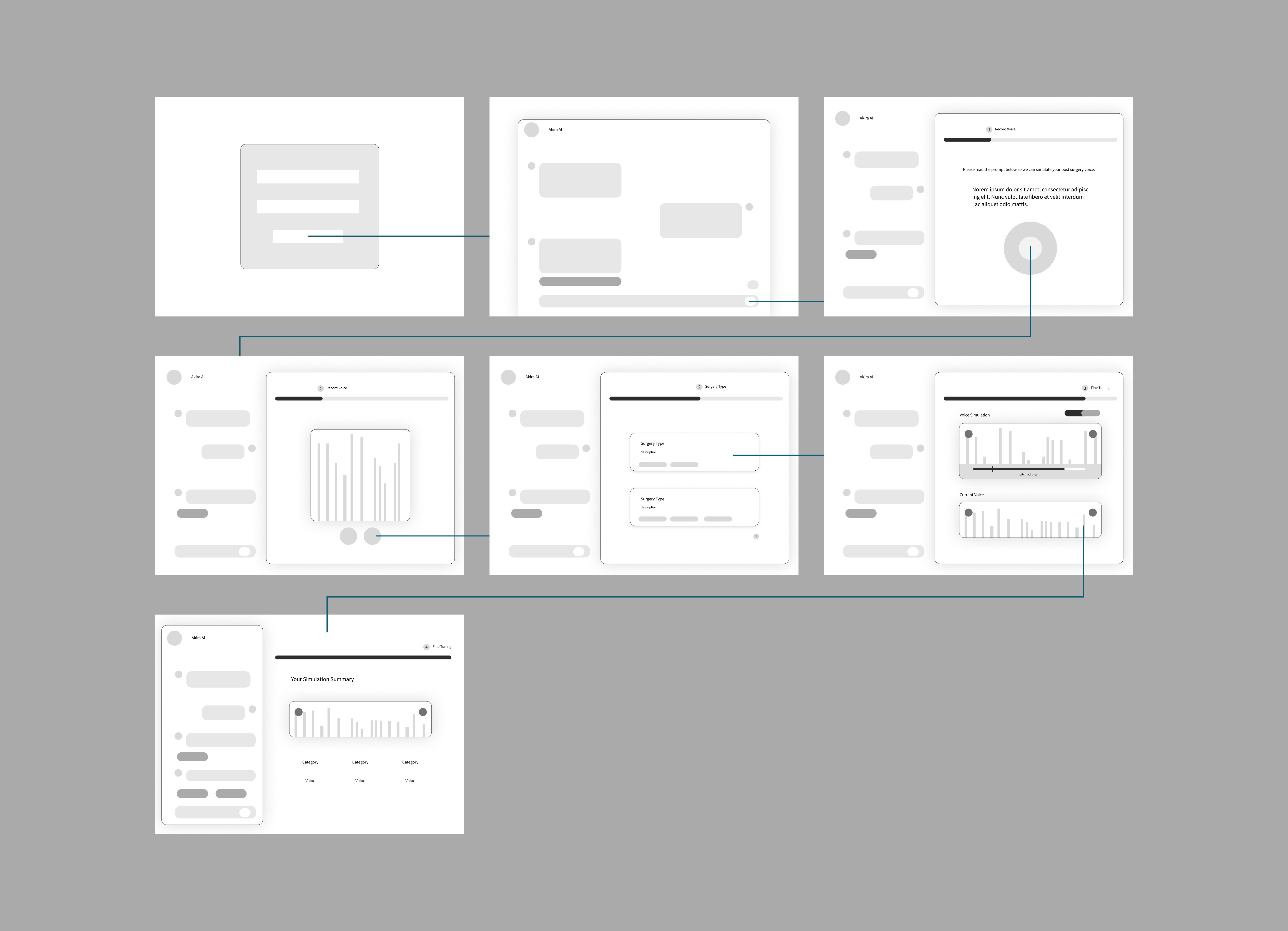
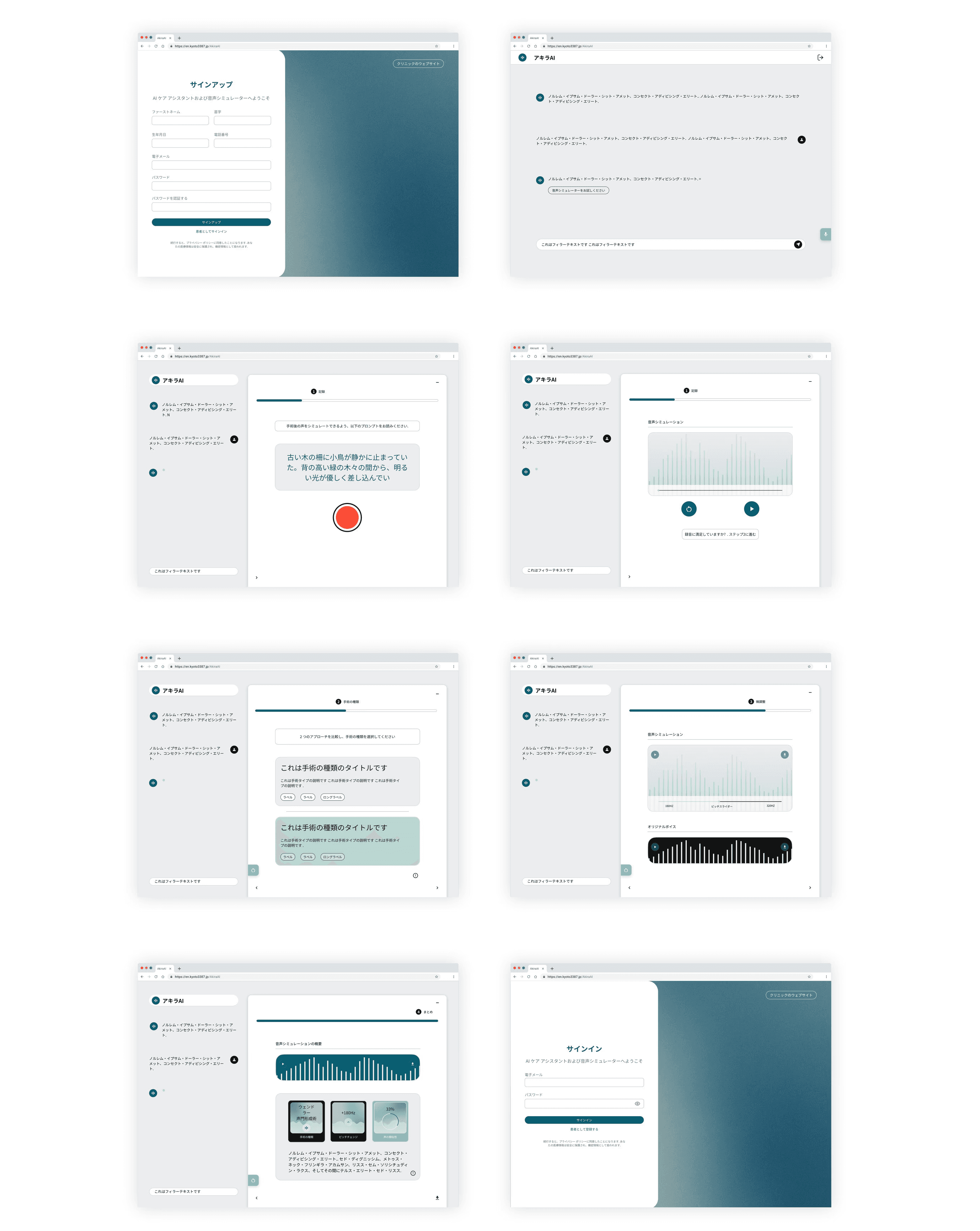
I centered the product around a split experience: conversation on one side, voice simulation on the other. I decided it was most important for patients to move back and forth between explanation and experience.
The voice simulator is intentionally simple. Rather than attempting complex real-time modeling, we limited the MVP to pitch and formant shifts tied to surgery type. This reduced the risk of false precision and made the limits of the simulation easier to understand. Recording is constrained to a short, guided script. This avoids overfitting.
The Product
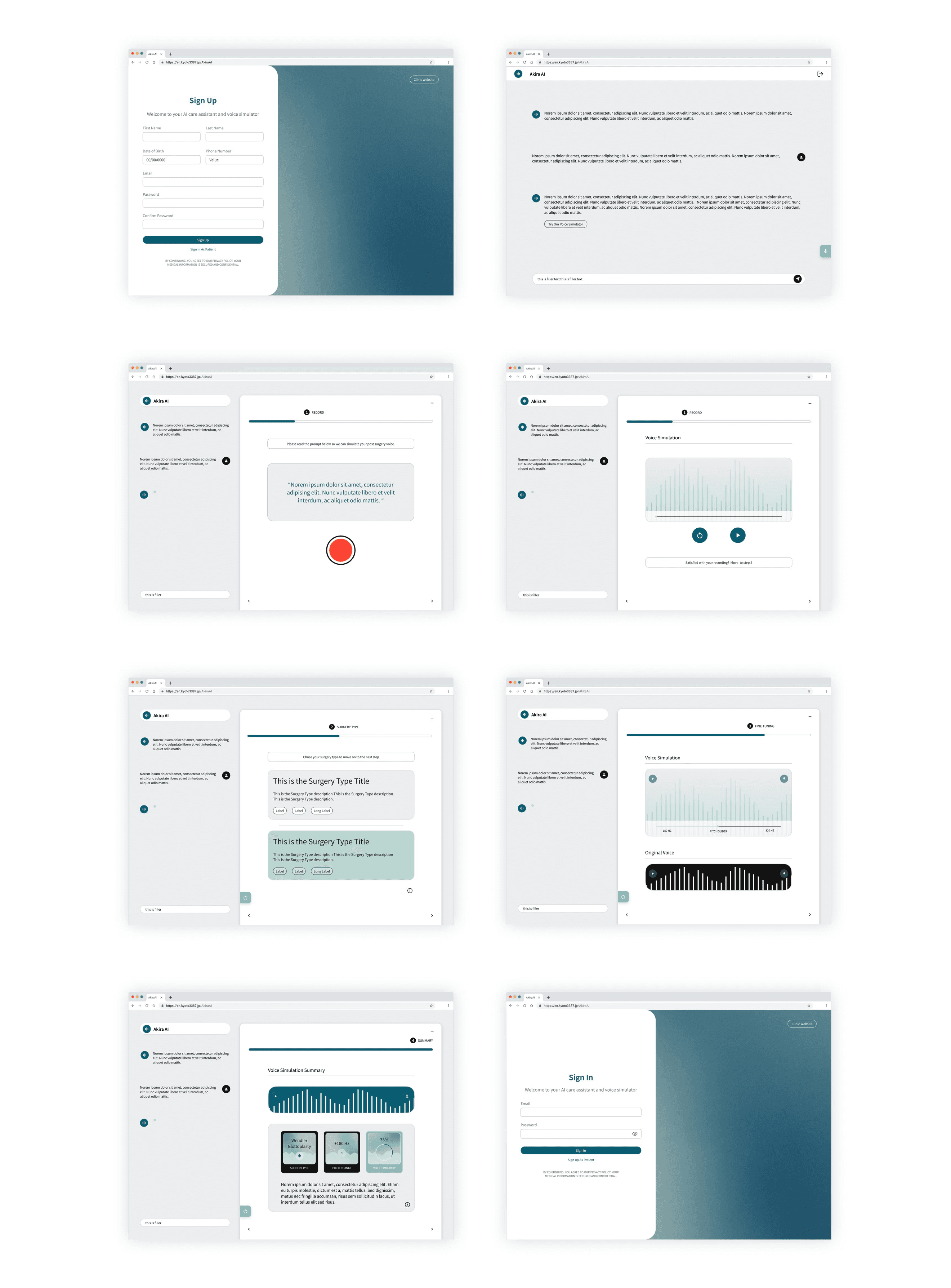
AkiraAI is a web-based chatbot and voice simulation experience designed to be used before a clinical decision is made.
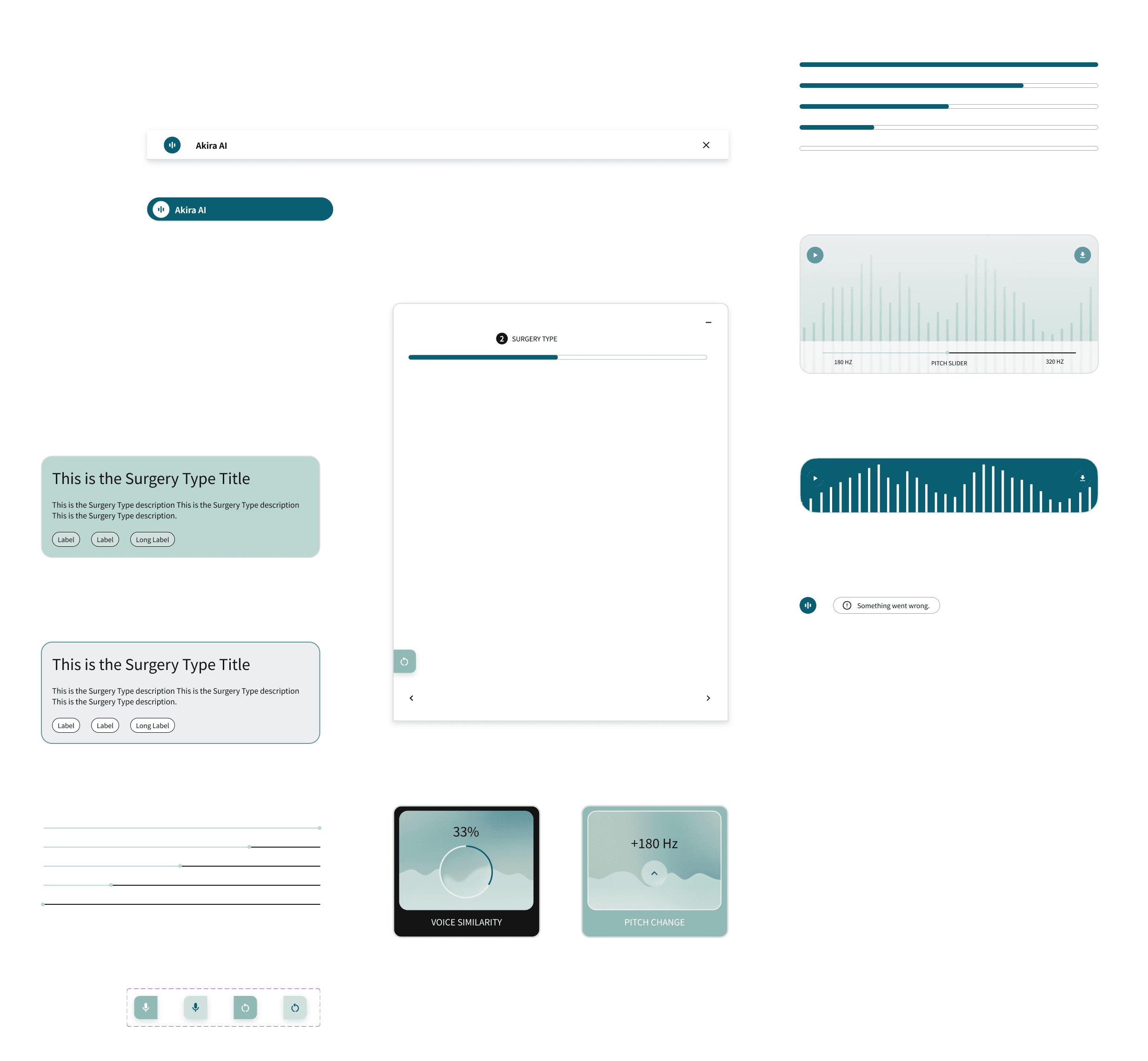
The visual language was designed to feel calm and non-threatening. A muted palette, exaggerated rounded corners, soft gradients, subtle shadows, and light glass effects reduce visual severity and help ease anxiety, in a high-stakes medical context.
Reflection
If AkiraAI were to evolve, two of the most meaningful changes I would love to implement are chat history and session persistence. Patients facing irreversible surgery rarely arrive at clarity in a single sitting. Allowing them to return to prior conversations and voice simulations could support more reflective decision-making, especially when discussions extend across multiple clinical visits or conversations with loved ones.
Future feature exploration should also focus on reinforcing trust. Different clinician-curated scripts could ensure relevance without personalization drift, explicit uncertainty markers would make the system’s limits harder to miss, and in-app clinician communication could help improve care.